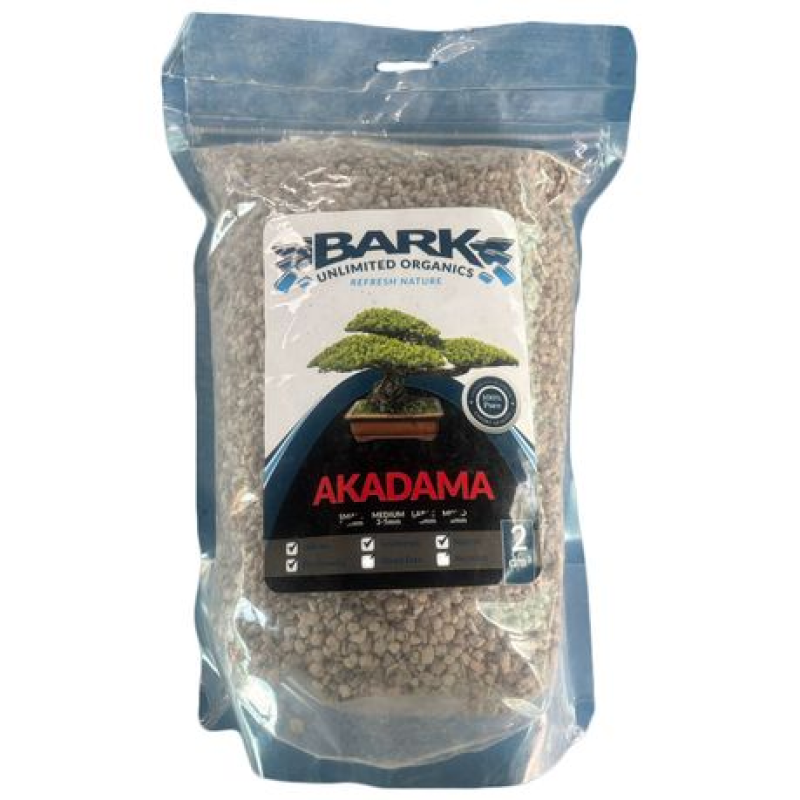
Akadama Soil 2dm – Premium Japanese clay for Bonsai & container plants by Bark Unlimited.
Create the ideal growing medium for healthy roots with high-quality Akadama from Bark Unlimited Organics. Akadama (literally “red ball earth”) is a naturally occurring granular volcanic clay, prized by bonsai growers and serious plant enthusiasts for decades.
This 3–5 mm grade offers the perfect balance of water retention and free drainage. The porous particles hold moisture and nutrients while allowing excess water to drain away, preventing root rot. As the granules slowly break down, they encourage the development of fine feeder roots - exactly what you want for strong, compact root systems.
Ideal for:
- Bonsai trees (deciduous and conifer species)
- Succulents and cacti mixes
- Container-grown plants and specialist potting blends
- Improving drainage and aeration in custom soil recipes
Key benefits:
- Excellent water retention with sharp drainage
- Encourages fine root ramification
- Colour darkens when wet - a natural watering indicator
- pH-neutral and free-draining structure
- Convenient 2 dm size - perfect for home growers and small projects
Whether you’re repotting a prized bonsai, blending a free-draining succulent mix, or upgrading your container soil, Bark Unlimited Akadama delivers professional results.
Frequently Asked Questions
- What is Akadama used for?
Akadama is a premium Japanese volcanic clay primarily used as a soil component for bonsai trees. It is also excellent in mixes for succulents, cacti, and other container-grown plants that need good drainage and aeration. - What particle size is this Akadama?
This is a 3–5 mm grade, which is ideal for most medium-sized bonsai, general container plants, and as a component in custom soil mixes. - Can I use Akadama on its own or should I mix it?
It can be used pure, but most growers blend it with other materials such as pumice, lava rock, or pine bark for optimal results. A common mix is roughly equal parts Akadama and other free-draining components. - How does Akadama help root growth?
The granules slowly break down over time, which encourages the plant to produce fine feeder roots instead of thick, coarse ones. This leads to a denser, healthier root system. - How do I know when to water plants grown in Akadama?
Akadama changes colour when wet — it darkens when moist and lightens as it dries. This natural visual cue makes it easier to judge the right time to water.